
Telecommunications infrastructure is the backbone of global connectivity and its operability depends, to a large extent, on efficient climate control systems. These not only ensure the continuous operation of critical equipment, but also extend its service life and minimize the risk of failure. In this article, we explore the most commonly used types of systems, their evolution, emerging technologies and trends that will define the future of the industry.
Types of Telecommunication Air Conditioning Systems
- Split and Multi-Split Systems
- Ideal for smaller scale installations, such as base stations or telecommunication nodes.
- They offer modularity and reduced costs, although their efficiency is limited for high thermal loads.
- Precision Cooling
- Designed for critical environments, they maintain stable temperatures and humidity (20-24°C and 40-60% RH).
- Essential in data centers and server rooms, where equipment density generates high temperatures.
- In-Row Cooling
- Located between server racks, they eliminate heat at its source, optimizing energy efficiency.
- Recommended for high density data centers.
- Free Cooling
- It takes advantage of outside air or chilled water to reduce the use of compressors, lowering operating costs.
- Common in regions with temperate or cold climates.
- Liquid Cooling Systems
- Focused on high-density applications, such as edge computing servers.
- They use cooling liquids to dissipate heat more efficiently than air.
AIRSYS and TEMPEL GROUP: State-of-the-Art Air Conditioning Solutions
At TEMPEL GROUP, a leader in critical infrastructure solutions, we are proud to offer precision air conditioning in partnership with AIRSYS, a global manufacturer recognized for innovation and quality.
AIRSYS Solutions
- Precision Cooling
- Designed for data centers and telecommunication nodes.
- Models with high energy efficiency, reducing operating costs by up to 40%.

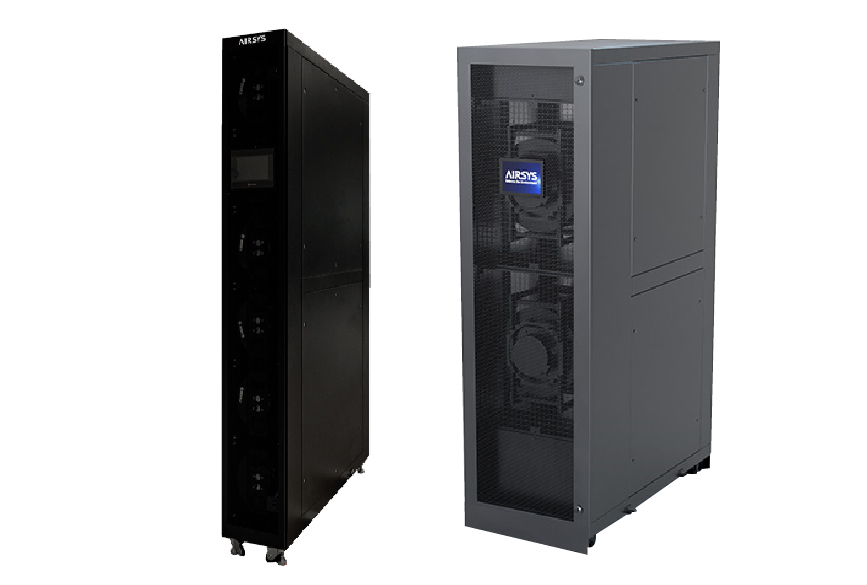
- In-Row Systems
- Compact, integrated into server racks to eliminate hot spots.
- Ideal for high-density environments such as edge computing.
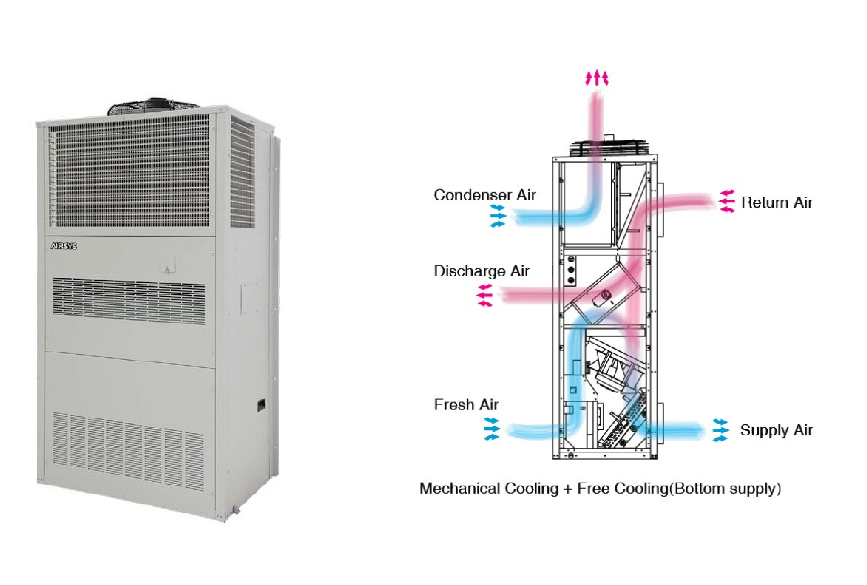
- Intelligent Free Cooling
- Combines traditional cooling with outside air, achieving significant savings in temperate climates.
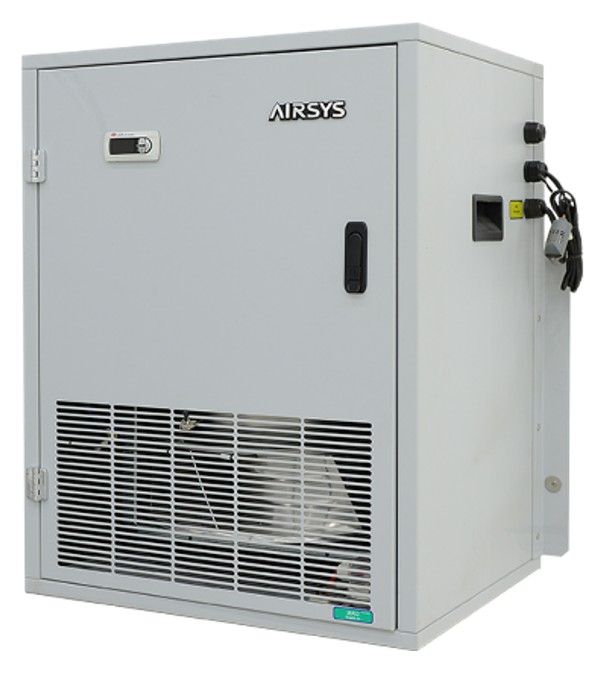
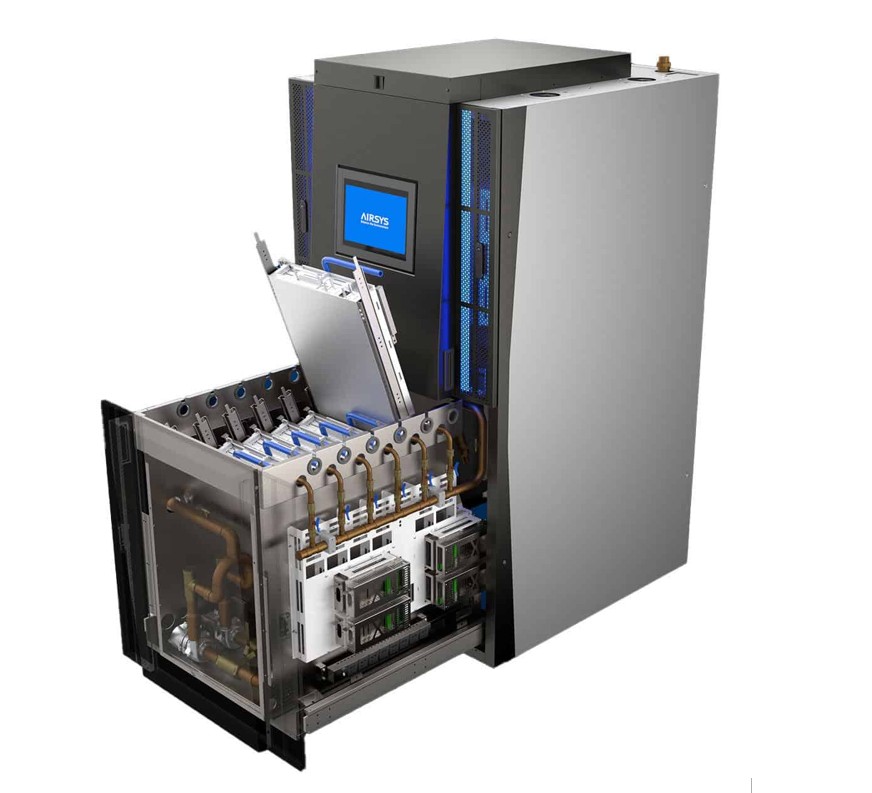
- Liquid Rack: State-of-the-Art Liquid Refrigeration
- Designed for ultra-high density applications.
- Reduces energy consumption by up to 50% compared to traditional systems.
Emerging Technologies and Trends in Climate Control
- Artificial Intelligence and Machine Learning
- Predictive analytics to optimize performance, detect anomalies and make automatic adjustments.
- IoT and Wireless Sensors
- Real-time monitoring of temperature, humidity and vibration for proactive maintenance.
- Ecological Refrigerants
- Transition to gases with low environmental impact (e.g., R-454B, ammonia, CO₂).
- Hybrid Systems
- Integration of free cooling, liquid cooling and solar energy to maximize efficiency.
- Integration with Renewable Energies
- Air conditioning powered by solar panels or batteries to reduce the carbon footprint.
- Innovative Materials
- Use of phase change composites (PCM) and nanotechnology to improve heat transfer.
CONCLUSION
At Tempel Group, we understand that climate control in telecommunications is key to technological evolution. Our solutions not only protect critical infrastructure, but also promote sustainability and innovation.
The adoption of smart and efficient systems not only solves current challenges, but also prepares the industry for future demands. Innovating in HVAC is investing in the future of global connectivity.

Contact our experts now and receive advice for your project.
? 905 453 924
? lima@tempelgroup.com